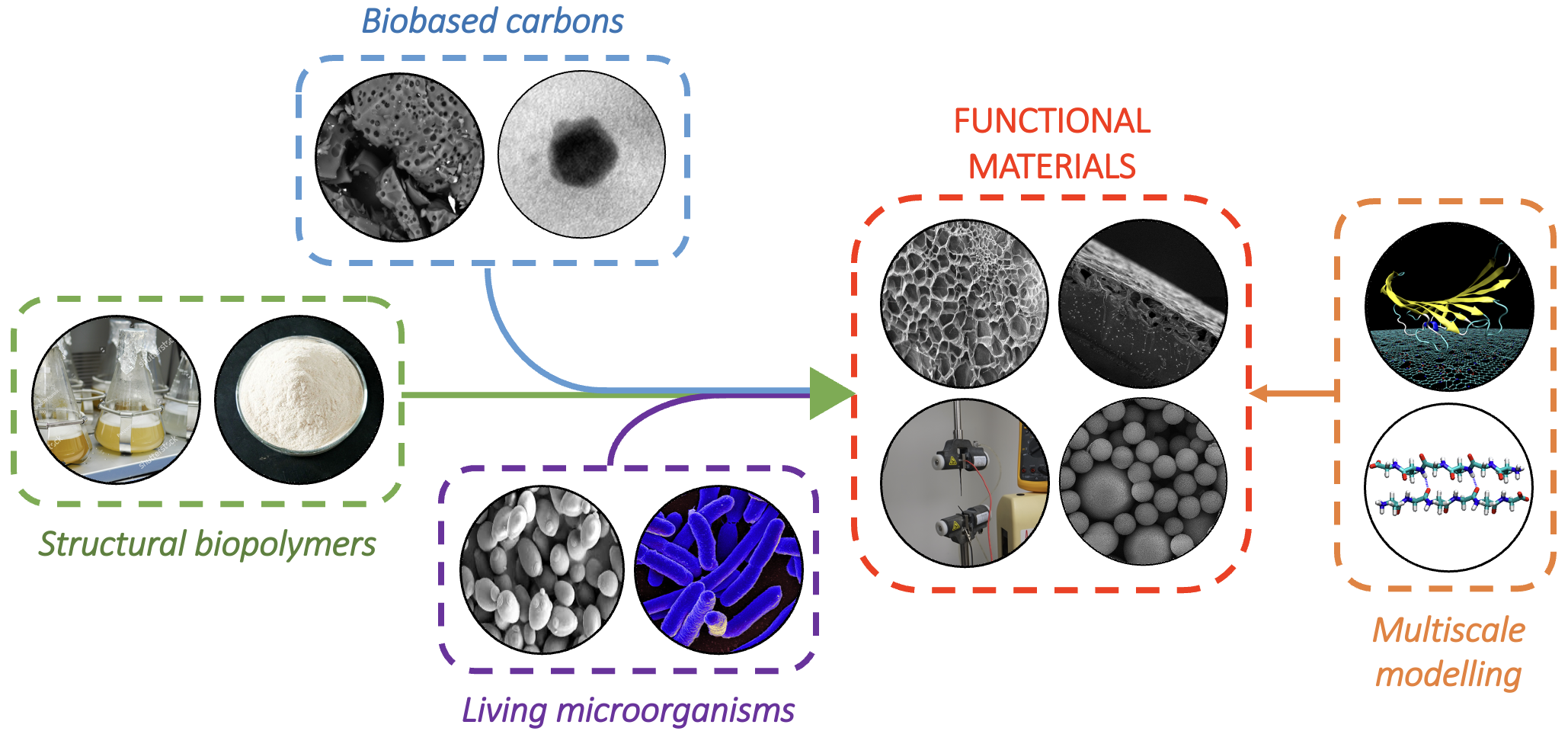
Our group is part of the Department of Chemical Engineering, the Manufacturing Futures Lab (MFL) and the Centre for Nature-Inspired Engineering (CNIE). We use biopolymers to develop functional materials, alone or in combination with additives like (i) microorganisms that synthesise functional molecules to create engineered living materials; or (ii) biobased carbons or biominerals to create composite/biomineralised materials. The aim is to invent new materials with tailored nanostructures, controlled interfacial chemistry, and advanced physicochemical or biological functionalities that can interact with the environment, other biomolecules, or living tissues. Our experimental work is supported by multiscale computation to connect molecular-based nanoscience with the macroscopic behaviour of our materials.
Read more about our research topics:
- Structure-property relationships for biopolymeric materials
- Living, composite and biomineralised materials
- Structure-property relationships for biopolymeric materials
Structural biopolymers
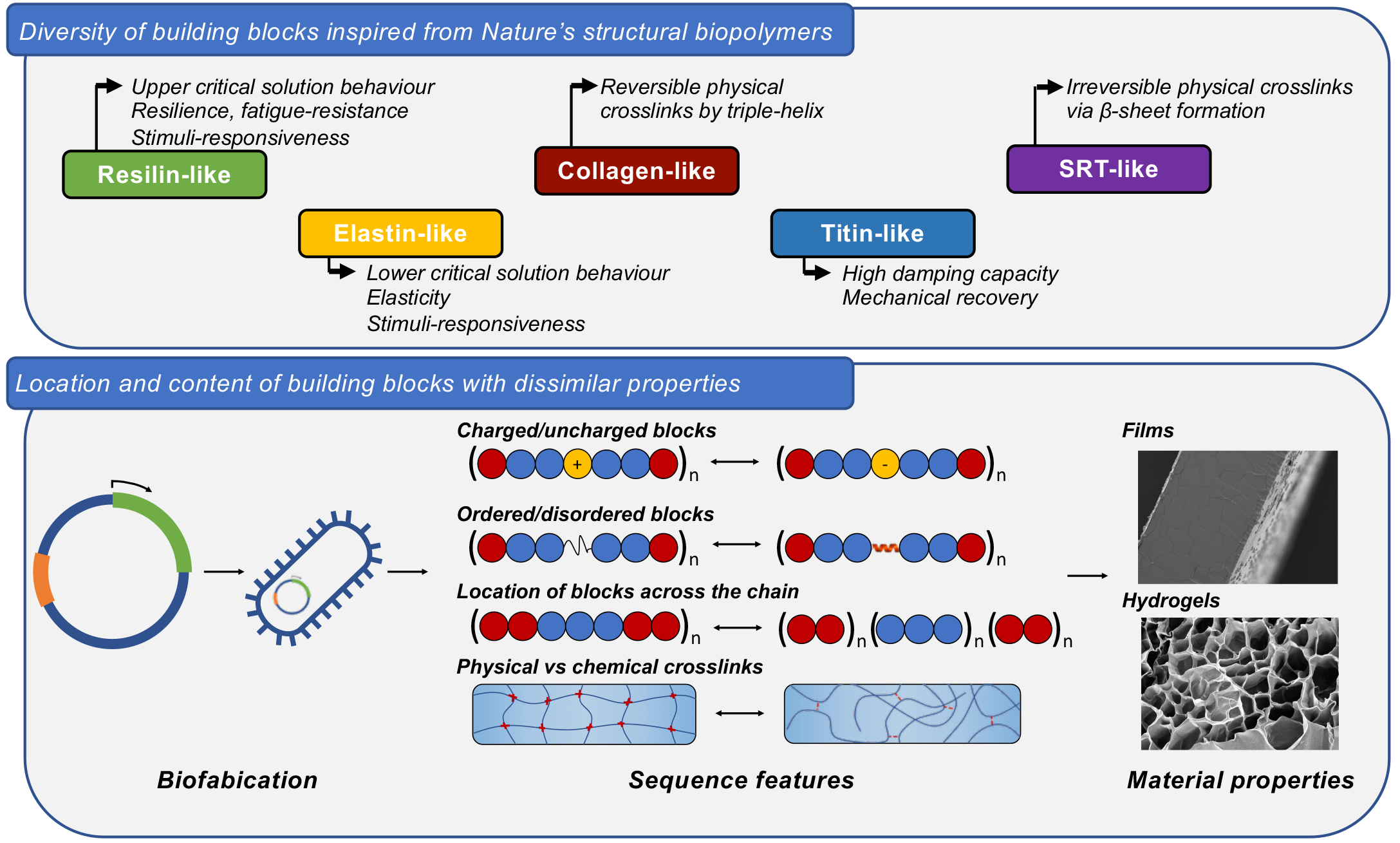
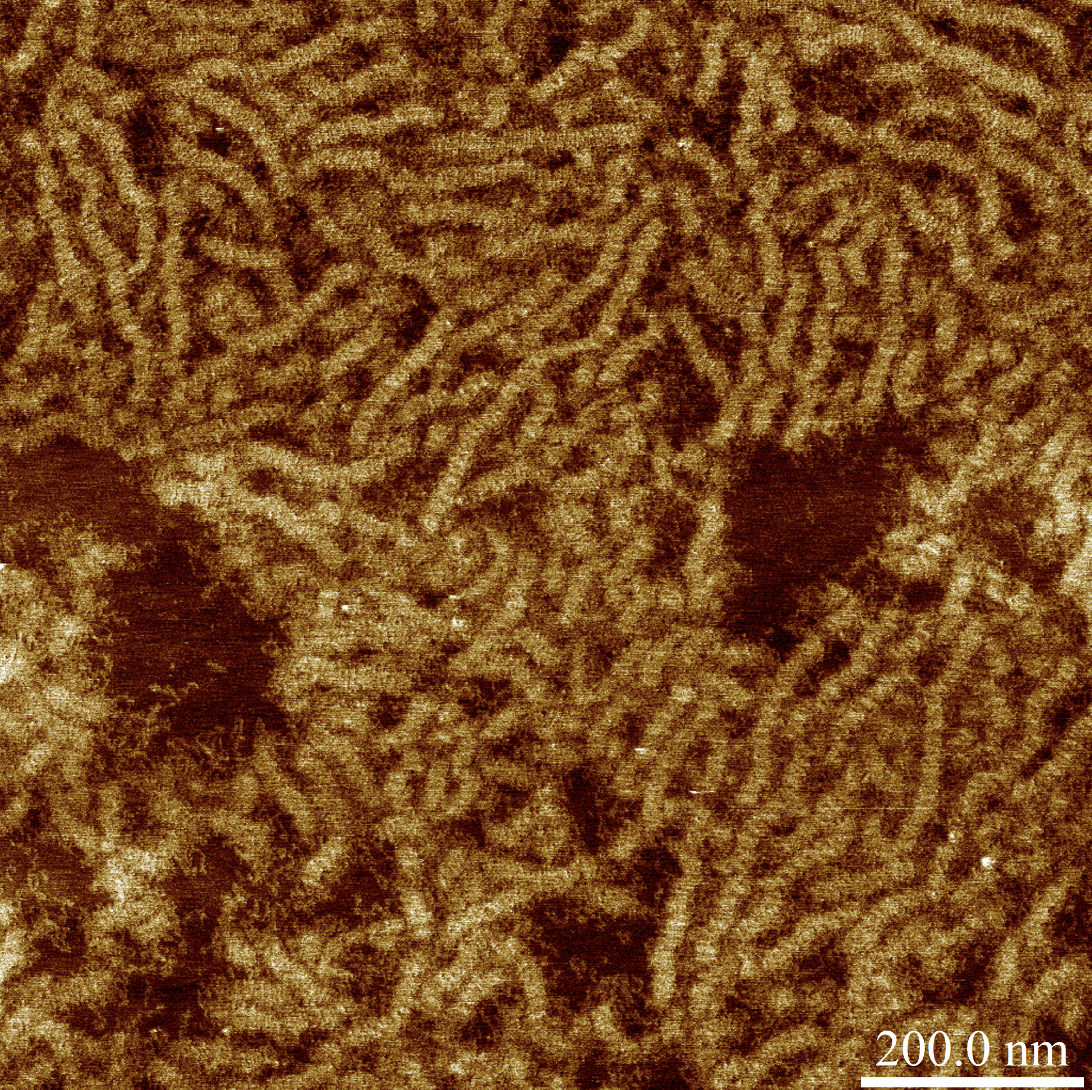
Biopolymers have a propensity towards molecular self-assembly and self-organisation that underpins their ability in living organisms to generate natural functional materials with remarkable performance. As a result of this, biopolymers are also gaining increasing attention as alternative building blocks to replace fossil-based polymers for the manufacture of synthetic functional materials. Developments in bioprocessing and synthetic biology are making it increasingly possible to design e.g., novel recombinant protein-based biopolymers that we use in our group to develop novel biopolymeric materials with adjustable mechanical properties, programmed functionalities, or the ability to adapt or respond to the environment. We use a range of chemical and physical characterisation techniques (rheology, AFM, FTIR, DLS, FRAP, among others) to develop a rational understanding of their self-assembly, mechanical properties, structures, and dynamic features.
Living and composite biopolymeric materials
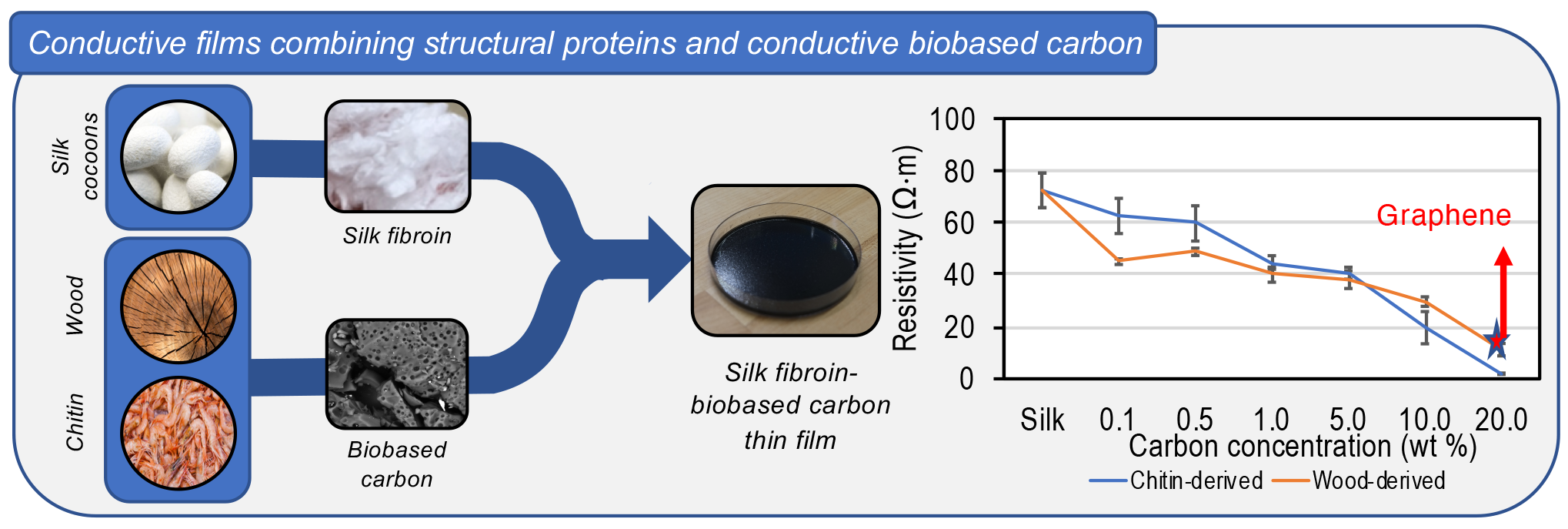
Natural and synthetic biopolymeric materials can be combined with additives to enhance their functionalities. We are interested in three types of additives: (1) biominerals whose growth is templated by purpose-made recombinant fibrillar proteins; (2) microorganisms capable of secreting functional molecules to create engineered living materials; and (3) biobased carbons to create composite materials for sensing or environmental applications.
On the one hand, microorganisms with tweaked biological functions can be developed and embedded in biopolymers to form living materials. These materials hybridise animate and inanimate elements, and display spatiotemporally dynamic architectures that grow and adapt to environmental signals. On the other hand, biobased carbons or biominerals provide us with an extra layer of control of the mechanical, structural or electrical properties of protein-based materials.
Computational studies on structure-property relationships
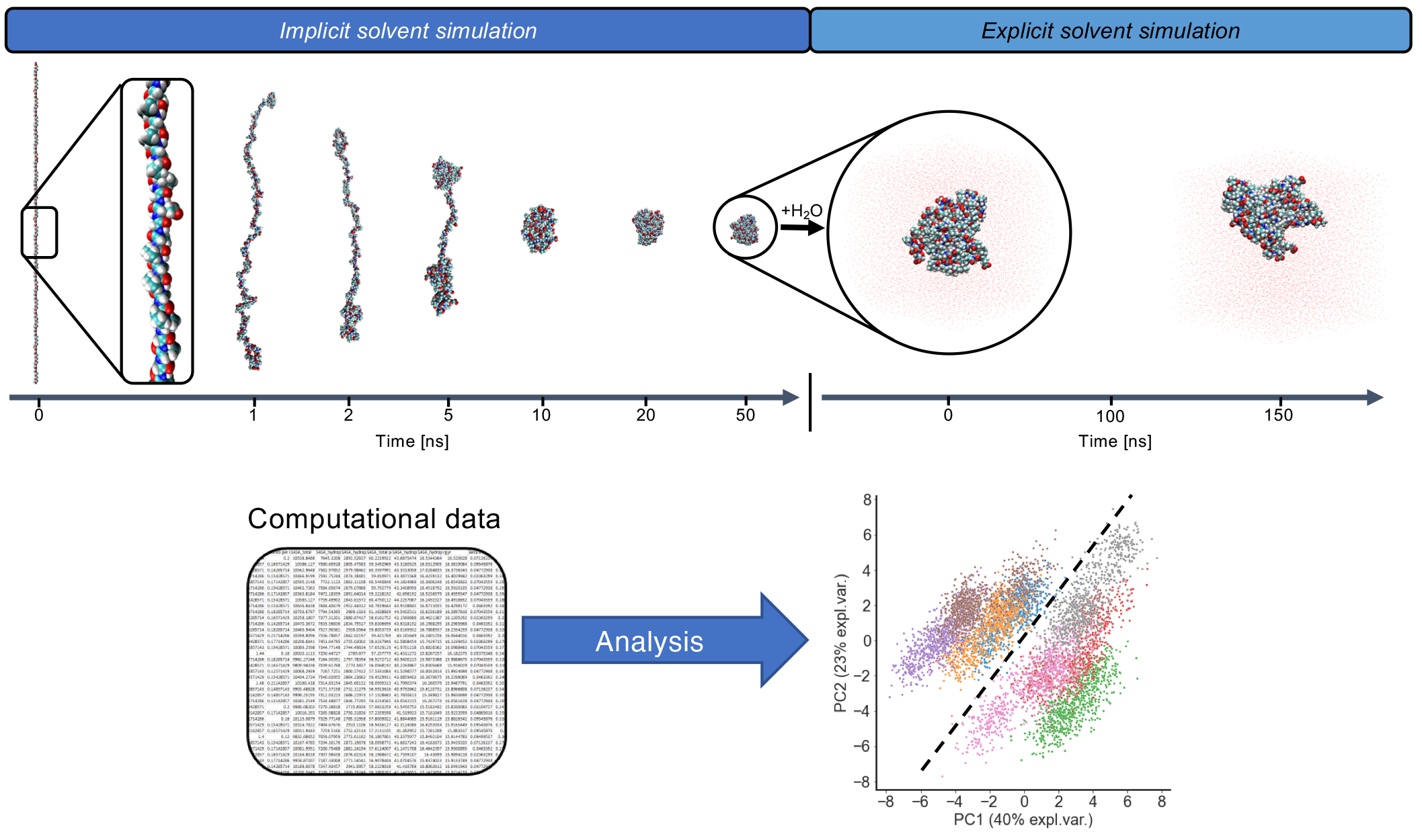
We use computational models to understand phenomena that exist at a hierarchy of time- and length-scales in biopolymeric and composite materials, mainly through fully-atomistic and coarse-grained molecular dynamics (MD) simulations. These simulations allow us to study hierarchical chemical details of protein-based materials down to the nanoscale (e.g., chain topologies, interfacial interactions) that are vital to develop a fundamental understanding of the behaviour on a meso- to macroscopic scale. Moreover, we seek to embed modelling into the early stages of material design, in order to improve the time efficiency to develop new materials while reducing the cost for experimentation.